Is Your Kitchen Layout Costing You $500 a Week in Labor?
When restaurant owners look at their P&L and see labor costs spiking, the first instinct is often to cut a shift or reduce team members. But before you look at the schedule, you need to look at the floor. In my years of conducting kitchen audits, I’ve found that high labor costs are often a symptom of a “lazy” kitchen layout. Efficiency isn’t just about how fast your line cooks can chop an onion; it’s about how many steps they have to take to get a plate in the window. If your staff is constantly crossing paths, searching for equipment, or walking to the walk-in during service, you aren’t just losing time—you’re losing thousands of dollars in wasted motion.
The “Golden Circle” of Station Design
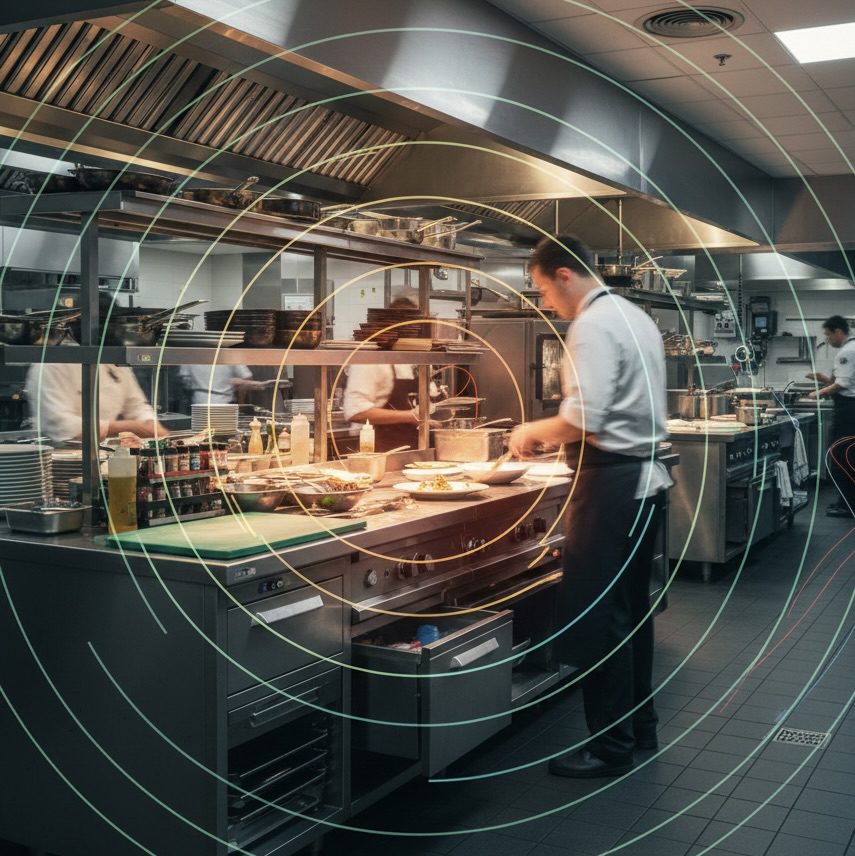
The most efficient kitchens are built on the principle of the “Golden Circle.” A cook should be able to reach 80% of what they need for a rush—oils, seasonings, common tools, and prepped proteins—without taking more than two steps in any direction.
Every time a sauté cook has to walk to the other side of the kitchen for a clean pan or a backup of heavy cream, service slows down. In a busy three-hour rush, those “quick walks” add up. If three line cooks spend just 10 minutes an hour simply walking, that’s 90 minutes of lost productivity per night. Over a week, that is over 10 hours of paid labor spent walking rather than cooking.
The Cost of a Disorganized Prep List
Efficiency also dies in the transition between prep and service. A disorganized prep station leads to “emergency prep” during the rush. When your lead line cook has to stop plating $30 entrees to peel garlic because the prep list was unclear, your labor efficiency plummets. A streamlined kitchen uses standardized “par sheets” that ensure the hand-off is seamless, keeping your most expensive talent focused on the window.
Seeing the Forest for the Trees
The hardest part about kitchen efficiency is that when you are in the weeds every day, you become “blind” to the chaos. You stop seeing the awkward reach or the bottleneck at the dish pit because “that’s just how it’s always been.”
This is where an outside perspective becomes your most valuable tool. A one-day audit isn’t just about looking at your food; it’s about watching the choreography of your team. By shaving just 15% off your wasted movement, you can often handle higher volumes with the same—or smaller—staff. Is your kitchen design working for you, or against you? Let’s stop the “walking leak” in your payroll. Schedule your One-Day Kitchen & Menu Audit Today!